


 Last Updated: October 8, 2026
 Read Time: 5 min

- Why Fault Percentages Matter in Santa Monica Claims

- How Prop 51 Divides Damages Among Multiple Defendants
- Jaywalking, the Freedom to Walk Act, and Pedestrian Fault
- Lane Splitting, Scooters, and Other Rider Disputes
- Inherent Risks on the Beach and in the Water
- How We Push Back on Unfair Fault Claims
- Talk to a Personal Injury Attorney in Santa Monica, CA About Shared Fault
If an insurance adjuster says you were partly to blame for your Santa Monica accident, your claim is not over. California follows a pure comparative fault system, so your own share of blame reduces your compensation instead of eliminating it. The percentage assigned to you can shift the value of your claim by thousands of dollars. Our Santa Monica, CA personal injury lawyer can challenge inflated fault percentages, identify every party who contributed to the crash, and protect the full value of your claim. Cohen Injury Law Group handles shared-fault disputes for pedestrians, cyclists, scooter riders, motorcyclists, and drivers throughout the city.
Why Fault Percentages Matter in Santa Monica Claims
Santa Monica’s streets put pedestrians, cyclists, scooter riders, and drivers in close quarters, so many crashes involve some argument over shared blame. Once negligence is established, each party receives a percentage of the fault. Insurers know that every point assigned to you lowers what they pay, which is why fault is often the most contested issue in a local claim. A finding that you were 15 percent at fault reduces your total award by 15 percent.
How Prop 51 Divides Damages Among Multiple Defendants
Many Santa Monica crashes involve more than one at-fault party, such as a rideshare driver who stops in a bike lane and a delivery van that swerves around it. Civil Code §1431.2, adopted through Proposition 51, treats the two types of damages differently:
- Economic damages: Medical bills, lost wages, and other financial losses remain joint and several, so you can collect your full economic recovery from any responsible defendant.
- Non-economic damages: Pain and suffering, emotional distress, and similar losses are several only, so each defendant pays only in proportion to its own percentage of fault.
For example, suppose a pedestrian crossing Ocean Avenue has $60,000 in economic losses and $140,000 in non-economic losses. A jury assigns 60 percent of the fault to the rideshare driver, 30 percent to the van driver, and 10 percent to the pedestrian. The pedestrian can recover $54,000 in economic damages from either driver. Non-economic damages are split, with $84,000 owed by the rideshare driver and $42,000 by the van driver. If the van driver has no insurance, the pedestrian can still collect the full $54,000 from the rideshare driver, but not the van driver’s $42,000 share.
Jaywalking, the Freedom to Walk Act, and Pedestrian Fault
Since 2023, Vehicle Code §21955 has limited when police can stop a pedestrian for crossing between signal-controlled intersections outside a crosswalk. An officer can act only when a reasonably careful person would recognize an immediate danger of a collision.
Fewer citations do not mean fewer fault arguments. The statute still requires pedestrians to use due care for their own safety, and insurers often point to mid-block crossings, phone use, or dark clothing to shift blame in pedestrian accident claims. Drivers keep their own duty to watch for people in the roadway, and that duty does not disappear because someone crossed outside a crosswalk.
Lane Splitting, Scooters, and Other Rider Disputes
Motorcyclists, scooter riders, and cyclists often face fault arguments tied to how they were riding:
- Lane splitting: California recognizes the practice in Vehicle Code §21658.1, which defines lane splitting and authorizes the California Highway Patrol to develop safety guidelines. A rider who splits lanes is not automatically at fault, but insurers may argue the rider moved too fast for traffic on the Santa Monica Freeway. Our motorcycle accident lawyer in Santa Monica, CA can use speed data and witness accounts to answer that argument.
- Scooter riding: Vehicle Code §21235 bars motorized scooters on sidewalks, except to enter or leave adjacent property, and requires riders under 18 to wear a helmet. In a scooter accident claim, a rider hit on the sidewalk, or a minor hurt without a helmet, may face an argument that part of the harm is their responsibility.
- Cycling: Cyclists who ride at night without required lights or against the flow of traffic can face the same type of argument in a bicycle accident claim, even when a driver caused the crash.
Inherent Risks on the Beach and in the Water
Some recreational injuries raise a different defense. Under Knight v. Jewett (1992), California’s primary assumption of risk doctrine can bar a claim for injuries caused by risks inherent in an active sport, such as a collision during a pickup beach volleyball game. The defense does not protect someone who increased the risk beyond what the activity normally involves, such as a rental operator who supplies defective equipment or a participant who acts recklessly. The same analysis can come up in boat accident claims involving water sports.
Other conduct that once fell under assumption of risk is now handled through comparative fault, which reduces the award rather than eliminating it.
How We Push Back on Unfair Fault Claims
Fault percentages remain open to dispute until a jury decides them. We gather evidence that tests the other side’s version of events, including collision reports, video, and phone records. Adjusters often use a disputed fault percentage to justify a low first offer, a common tactic in dealing with insurance companies after an accident.
Talk to a Personal Injury Attorney in Santa Monica, CA About Shared Fault
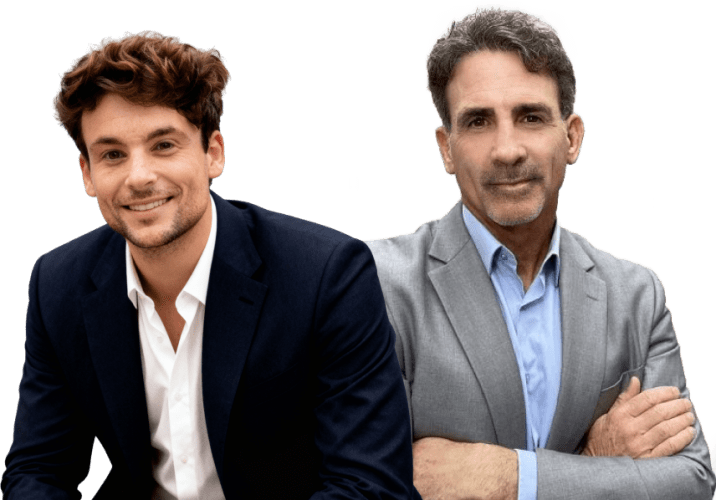
Attorney Wayne R. Cohen has practiced law since 1991 and earned his law degree cum laude from the University of Miami School of Law. Attorney Nicholas E. Cohen, a USC graduate, works with him on shared-fault cases throughout the Westside. Cohen Injury Law Group also represents riders in nearby communities, including Culver City motorcyclists.
Consultations are free, and you pay no attorney fees unless we recover compensation. Contact our team to discuss your case.
Office Locations
-
 Santa Monica
2636 Lincoln Blvd
Santa Monica, CA 90405 - Santa Monica – Broadway
520 Broadway, 2nd Floor
Santa Monica, CA 90401 - Los Angeles
633 W 5th St, Unit 2876A
Los Angeles, CA 90071 - Ventura
394 E Main St, Suite 302
Ventura, CA 93001
