














 Last Updated: September 8, 2026
 Read Time: 14 min

-
Motorcycle Accident Lawyer Ventura, CA

-
Ventura Motorcycle Accident Lawyer
-
Common Causes Of Motorcycle Accidents In Ventura
-
Ventura Motorcycle Accident Infographic
-
What To Do After A Motorcycle Accident
-
California Motorcycle Laws
-
Damages In Motorcycle Accident Cases
-
Motorcycle Accident Lawyer Ventura FAQs
-
Motorcycle Accident Statistics
-
Dangerous Roads For Motorcyclists In Ventura County
-
Why Choose Cohen Injury Law Group
-
Contact A Ventura Motorcycle Accident Attorney
-
Visit Our Ventura Motorcycle Accident Law Offices
-
-
HELPFUL VENTURA MOTORCYCLE ACCIDENT LAWYER LINKS
Summary
- Motorcyclists are roughly 24 times more likely to die in a crash than passenger car occupants per mile traveled, and California, with over 800,000 registered motorcycles, leads the nation in both registrations and rider fatalities.
- This page explains why motorcycle accidents in Ventura County are different, covers the rider bias insurers exploit, California’s lane splitting and helmet laws, and what to do after a crash to protect your claim.
Motorcycle Accident Lawyer Ventura, CA
Motorcycle accidents aren’t like car accidents. The injuries are worse. The bias against riders is real. And insurance companies work hard to blame the motorcyclist—even when the other driver caused the crash.
If you’ve been hurt in a motorcycle accident in Ventura County, you need an attorney who understands what riders face. Someone who won’t buy into the “motorcycles are dangerous” narrative that insurers use to minimize claims.
Cohen Injury Law Group represents injured motorcyclists throughout Ventura County. As experienced Ventura personal injury lawyers, we’ve handled motorcycle crashes on Highway 101, Pacific Coast Highway, and the back roads that draw riders to this area. Wayne R. Cohen has tried cases for more than three decades. He knows how to fight for riders and win.
We work on contingency. You pay nothing unless we recover compensation. If you need a motorcycle accident lawyer in Ventura, call us for a free consultation.
Why Motorcycle Accidents Are Different In Ventura, CA
Riders don’t have the protection car drivers take for granted. No steel frame. No airbags. No crumple zones. When a car turns left in front of a motorcycle or changes lanes without looking, the rider absorbs the impact directly.
The result: motorcycle accidents cause more severe injuries per crash than car accidents. According to the National Highway Traffic Safety Administration (NHTSA), motorcyclists are about 24 times more likely to die in a crash than passenger car occupants, per mile traveled. They’re also four times more likely to be injured.
California has more registered motorcycles than any other state—over 800,000. The weather allows year-round riding. But that also means more accidents. NHTSA’s Fatality Analysis Reporting System shows California consistently leads the nation in motorcycle fatalities.
Ventura County’s mix of highway riding, coastal routes, and mountain roads creates varied conditions. Highway 101 sees heavy traffic and distracted drivers. PCH has its own hazards. The roads through Ojai and the Los Padres foothills attract sport riders—and present their own risks.
The Bias Problem
Here’s what riders already know: when a motorcycle and car collide, people assume the rider did something wrong. Went too fast. Weaved through traffic. Took unnecessary risks.
Insurance adjusters exploit this bias. They look for any reason to shift blame to the motorcyclist—even when the other driver clearly caused the crash. Common tactics include:
- Claiming the rider was speeding (often without evidence)
- Arguing the motorcycle was hard to see
- Suggesting lane splitting caused or contributed to the accident
- Pointing to lack of protective gear as evidence of recklessness
California law doesn’t require adult riders to wear anything beyond a DOT-approved helmet. Not wearing full leathers isn’t negligence. But insurers try to use it against you anyway.
We push back on this. We investigate crashes thoroughly, document what actually happened, and counter the bias with facts.

Ventura Motorcycle Accident Lawyer
35+ Years of Experience
Common Causes Of Motorcycle Accidents In Ventura
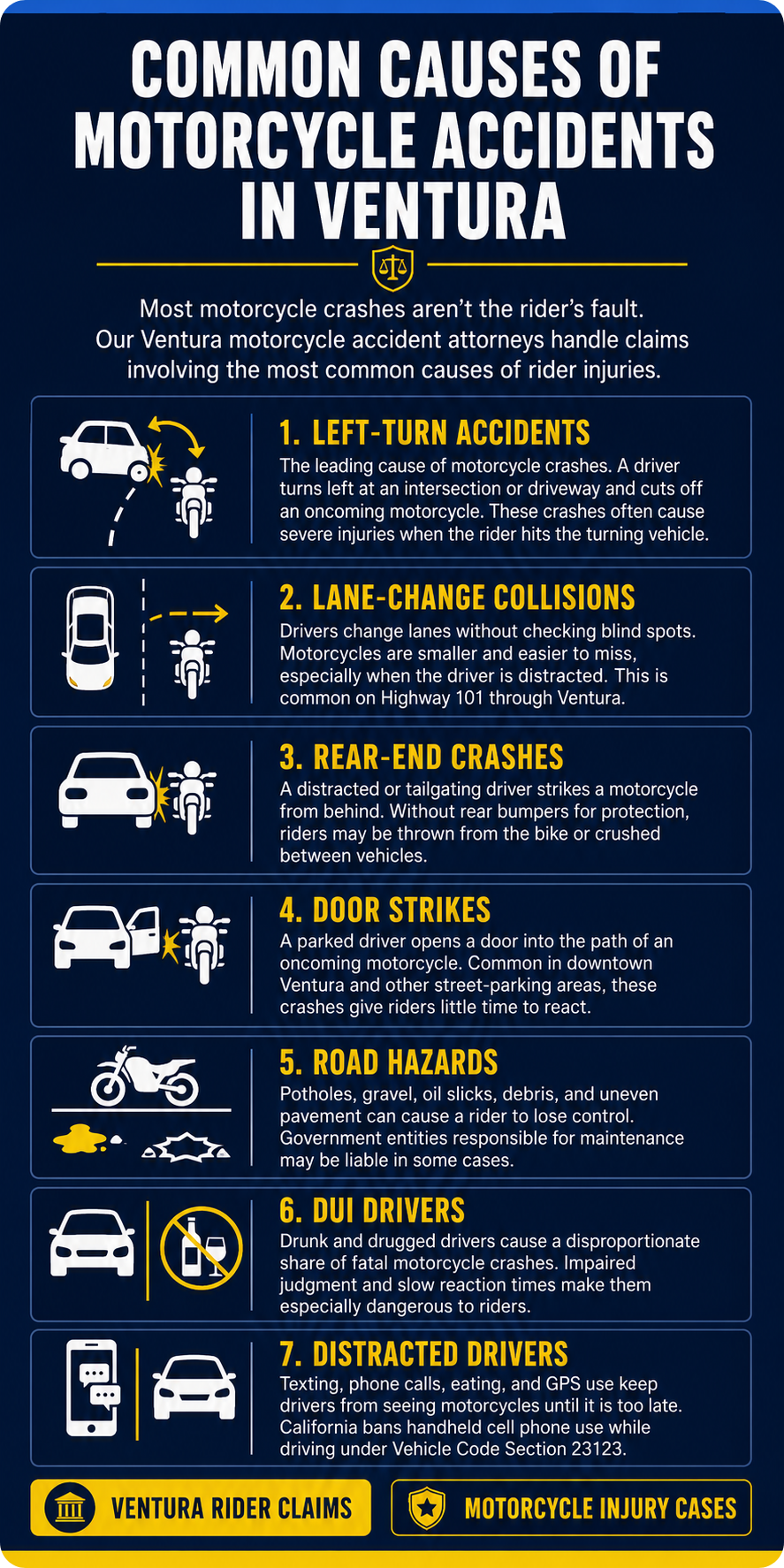
Most motorcycle crashes aren’t the rider’s fault. The most common causes:
- Left-Turn Accidents. The leading cause of motorcycle accidents. A car turns left at an intersection or into a driveway and cuts off an oncoming motorcycle. Drivers misjudge motorcycle speed or simply don’t see the bike. These crashes often cause severe injuries because the rider hits the side of the turning vehicle.
- Lane-Change Collisions. Drivers fail to check blind spots before changing lanes. Motorcycles are smaller and easier to miss—especially if the driver is distracted. Highway 101 through Ventura sees these constantly.
- Rear-End Crashes. A distracted or following-too-close driver hits a motorcycle from behind. Unlike cars, motorcycles don’t have rear bumpers to absorb impact. Riders get thrown from the bike or crushed between vehicles.
- Door Strikes. A parked driver opens their door into the path of an oncoming motorcycle. Common in downtown Ventura and other areas with street parking. Riders can’t swerve in time and hit the door directly.
- Road Hazards. Potholes, gravel, oil slicks, debris, uneven pavement. Conditions that cars drive over without noticing can cause a motorcycle to lose control. Government entities responsible for road maintenance may be liable.
- DUI Drivers. Drunk and drugged drivers cause a disproportionate share of fatal motorcycle crashes. Their impaired judgment and slow reaction times make them especially dangerous to riders.
- Distracted Drivers. Texting, phone calls, eating, adjusting GPS. Distracted drivers don’t see motorcycles until it’s too late. California bans handheld cell phone use while driving under Vehicle Code Section 23123, but enforcement is inconsistent.
Ventura Motorcycle Accident Infographic
Lane Splitting In California
California is the only state that explicitly allows lane splitting—riding between lanes of slow or stopped traffic. Assembly Bill 51, signed in 2016, authorized the California Highway Patrol to develop guidelines for safe lane splitting.
The CHP’s lane splitting guidelines recommend:
- Splitting at no more than 10 mph faster than surrounding traffic
- Not splitting when traffic is moving above 30 mph
- Being visible and predictable
- Avoiding splitting near large vehicles, in bad weather, or on unfamiliar roads
Lane splitting is legal, but insurers still try to blame riders for accidents that happen while splitting. They argue the rider was going too fast or that splitting “caused” the crash—even when the real cause was a driver changing lanes without signaling or checking mirrors.
We know how to handle these arguments. Legal lane splitting doesn’t equal fault.
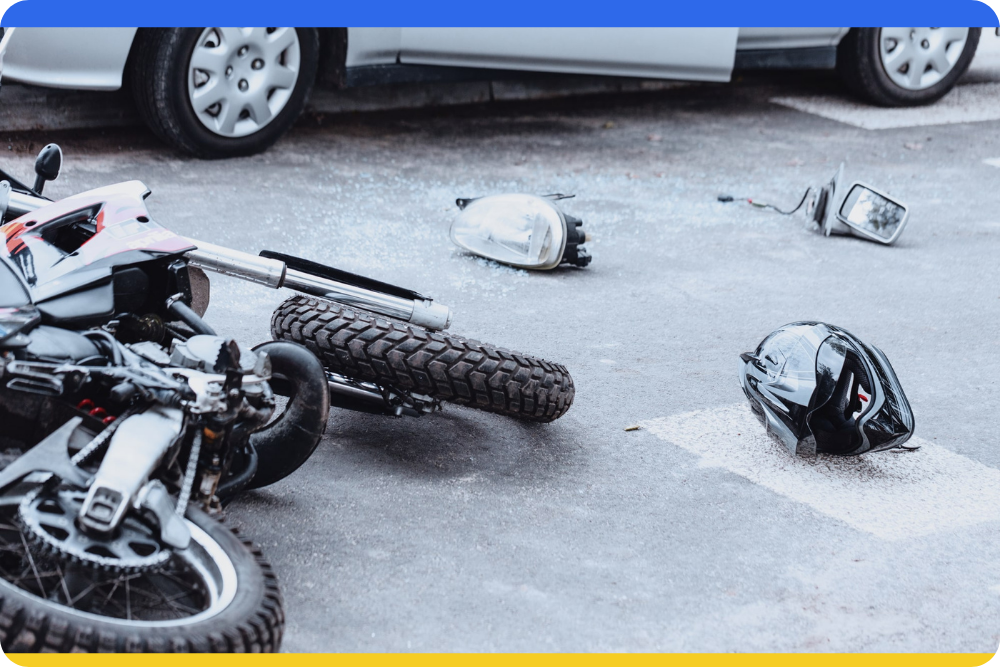
Motorcycle Accident Injuries
The lack of protection around motorcyclists means injuries tend to be severe. Common injuries we see:
Road Rash. Sliding across pavement shreds skin. Mild road rash is painful but heals. Severe road rash goes down to muscle or bone, requires skin grafts, and leaves permanent scars. Even with protective gear, road rash happens.
Broken Bones. Legs, arms, wrists, collarbones, ribs, pelvis. Motorcycle crashes break bones that cars protect. Some fractures heal with casting. Others need surgery, plates, screws, and months of recovery. Fractures near joints can cause permanent problems.
Traumatic Brain Injury (TBI). Helmets reduce TBI risk but don’t eliminate it. The brain can still strike the inside of the skull on impact, causing concussions or worse. Symptoms include memory problems, difficulty concentrating, mood changes, and headaches. Severe TBIs cause permanent cognitive impairment.
Spinal Cord Injuries. The impact of a crash can fracture vertebrae or damage the spinal cord directly. Results range from chronic pain to partial or complete paralysis. Spinal cord injuries often mean lifelong medical care and inability to work.
Internal Injuries. Blunt force trauma damages organs—spleen, liver, kidneys, lungs. Internal bleeding isn’t always obvious immediately. That’s why medical evaluation after any significant crash is critical.
Limb Loss. Severe crush injuries sometimes require amputation. The leg trapped under a bike, the arm caught between vehicles. Losing a limb changes everything—work, daily activities, self-image.
Facial and Dental Injuries. Even with a full-face helmet, facial injuries happen. Open-face helmets provide less protection. Broken jaws, lost teeth, facial fractures, and scarring are common.
Biker’s Arm. When riders fall, they instinctively extend their arms. The impact damages nerves in the upper arm, sometimes permanently. Biker’s arm can cause weakness, numbness, or paralysis in the affected limb.
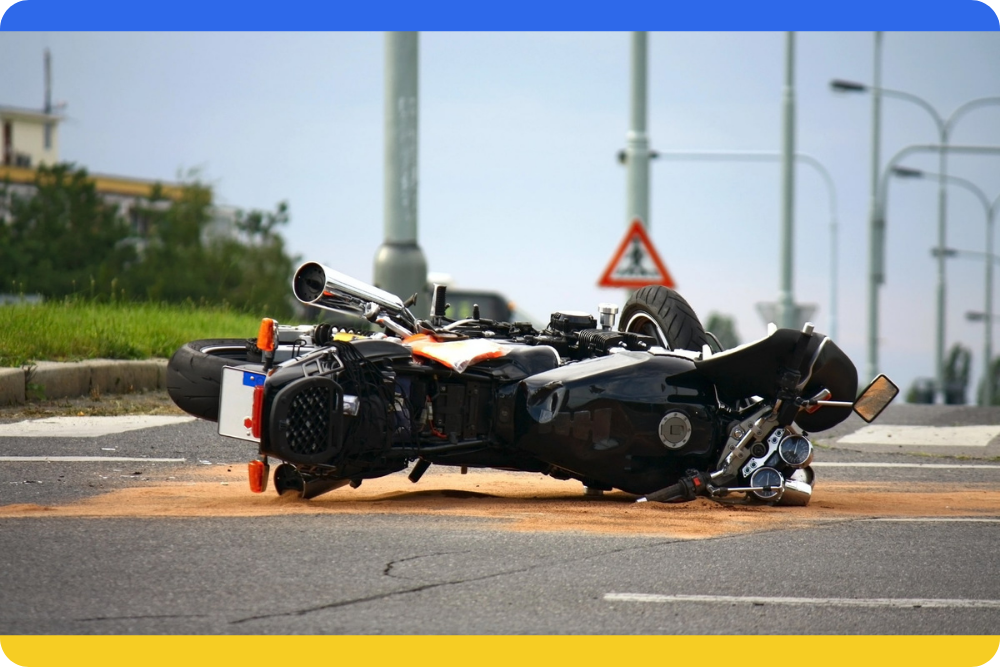
What To Do After A Motorcycle Accident
What you do after a crash affects your health and your legal claim. Here’s what we tell clients:
At The Scene
- Check yourself for injuries. Adrenaline masks pain. Assume you’re hurt until a doctor says otherwise.
- Call 911. Get police and EMS to the scene. A police report documents what happened while it’s fresh.
- Don’t remove your helmet if you have any neck or head pain. Let paramedics handle it.
- Get the other driver’s information. Name, phone, address, license number, insurance company and policy number, license plate.
- Document everything. Take photos of the vehicles, the scene, skid marks, road conditions, traffic signs, and your injuries. Get multiple angles.
- Collect witness information. Names and phone numbers. Witnesses can confirm what the other driver did.
- Don’t admit fault or apologize. Anything you say can be used against you later. Stick to facts when talking to police.
After You Leave
- Get medical attention immediately. Even if you feel okay. Some injuries don’t show symptoms for hours or days. Delaying treatment also gives insurers an excuse to question your injuries.
- Follow your treatment plan. Go to all appointments. Complete physical therapy. Follow doctor’s orders. Gaps in treatment hurt your case.
- Report the accident to your insurance company. Basic facts only. Don’t give recorded statements to the other driver’s insurer without talking to a lawyer.
- Save everything. Medical bills, repair estimates, receipts for anything related to the crash. Keep your damaged gear and helmet.
- Stay off social media. Insurance adjusters check your accounts. That photo of you smiling at a barbecue becomes “evidence” that your injuries aren’t serious.
- Contact a Ventura motorcycle accident attorney. Get advice before you talk to adjusters or accept any settlement.
California Motorcycle Laws
Key laws that affect your case:
Helmet Requirement. California requires all riders and passengers to wear DOT-compliant helmets. Vehicle Code Section 27803. Not wearing a helmet can reduce your compensation for head injuries—but doesn’t bar your claim entirely.
Insurance Requirements. Motorcyclists must carry liability insurance: $15,000 for injury to one person, $30,000 for multiple injuries, $5,000 for property damage. Vehicle Code Section 16028. Many riders carry more, including uninsured/underinsured motorist coverage.
Statute of Limitations. You have two years from the accident to file a personal injury lawsuit under California Code of Civil Procedure Section 335.1. Miss the deadline and you lose your right to sue. Claims against government entities require filing an administrative claim within six months.
Comparative Fault. California uses pure comparative negligence under Civil Code Section 1714. If you’re partly at fault, your compensation is reduced by your percentage of blame—but you can still recover. Even at 80% fault, you’d get 20% of your damages.
Lane Splitting. Legal in California when done safely. Insurers can’t deny your claim just because you were lane splitting at the time of the crash.
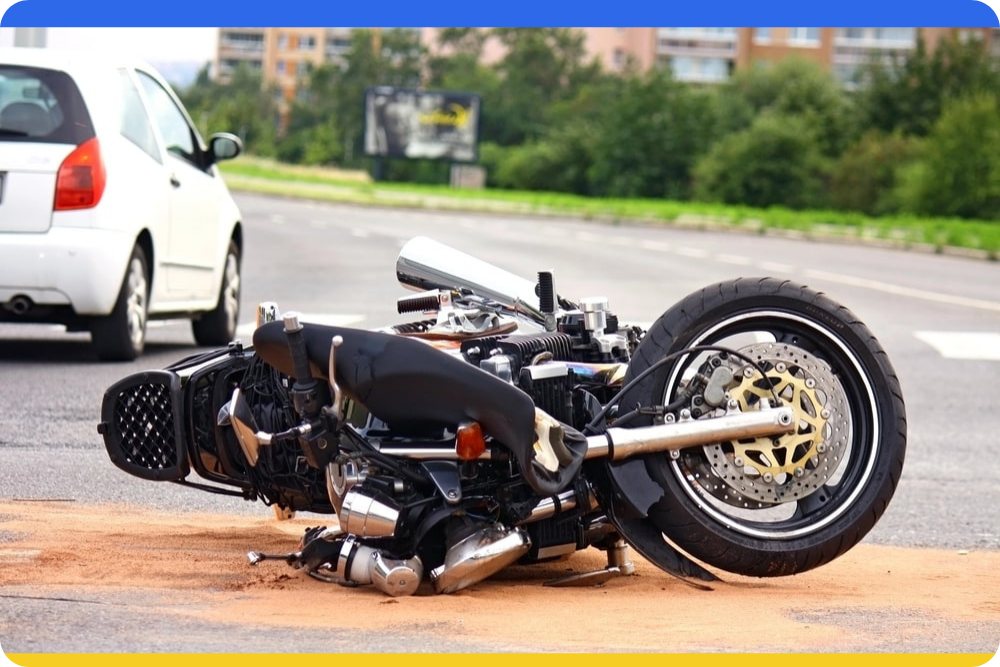
Damages In Motorcycle Accident Cases
If another driver caused your crash, you can recover compensation for:
Medical Expenses. Ambulance, ER, hospital stays, surgery, doctors, physical therapy, medications, medical equipment, future treatment. Motorcycle injuries often require extensive care—the costs add up fast.
Lost Income. Wages lost while recovering. If your injuries affect your ability to work long-term, future lost earning capacity counts too.
Property Damage. Repair or replacement of your motorcycle, plus damaged gear—helmet, jacket, gloves, boots.
Pain and Suffering. Physical pain and emotional distress. Motorcycle crashes hurt. The law compensates you for that suffering.
Disability and Disfigurement. Permanent impairments, scarring, limb loss. Compensation reflects how these injuries affect your life going forward.
Loss of Enjoyment. If injuries stop you from riding—or from other activities you loved—that’s a compensable loss.
Wrongful Death. If a rider dies, surviving family members can pursue a wrongful death claim for funeral costs, lost income, and loss of companionship.
The California Civil Jury Instructions provide guidance on how damages are calculated. The California Courts Self-Help Guide has additional information on personal injury claims.
Motorcycle Accident Lawyer Ventura FAQs
How Much Is My Motorcycle Accident Case Worth?
Depends on your injuries, medical costs, lost income, and how the crash affects your life. Minor injuries settle for less. Catastrophic injuries—TBI, spinal cord damage, amputation—can result in settlements or verdicts in the millions. We can give you a realistic assessment after reviewing your case.
What If The Other Driver’s Insurance Isn’t Enough?
Minimum liability coverage in California is only $15,000 per person. Serious motorcycle injuries easily exceed that. Options include pursuing the driver personally (if they have assets) or filing a claim under your own underinsured motorist coverage. That’s why carrying UM/UIM coverage matters.
Do I Need A Lawyer For A Motorcycle Accident?
You’re not required to hire one. But insurance companies treat unrepresented claimants differently—and not in a good way. They offer less, delay more, and exploit the bias against riders. Lawyers who know motorcycle cases push back effectively. Most clients end up with more money even after attorney fees.
What If I Wasn’t Wearing All My Gear?
California only requires a helmet for riders over 18. Not wearing a jacket, gloves, or boots isn’t illegal. Insurers may argue it contributed to your injuries, potentially reducing compensation for specific injuries that gear might have prevented. But it doesn’t bar your claim or excuse the other driver’s negligence.
What If The Police Report Blames Me?
Police reports aren’t final determinations of fault. Officers arrive after the crash and piece together what happened based on limited information. We investigate independently—reviewing physical evidence, interviewing witnesses, and sometimes working with accident reconstruction experts. Police conclusions can be challenged.
How Long Will My Case Take?
Simple cases with clear liability might settle in a few months. Serious injuries take longer—often one to two years—because you shouldn’t settle before understanding the full extent of your injuries. Litigation extends the timeline further. We don’t rush settlements at the expense of fair compensation.
Can I Still Ride After Filing A Lawsuit?
Yes. Continuing to ride doesn’t hurt your case. Just be careful about what you post on social media—photos of you on a bike can be taken out of context by insurers.
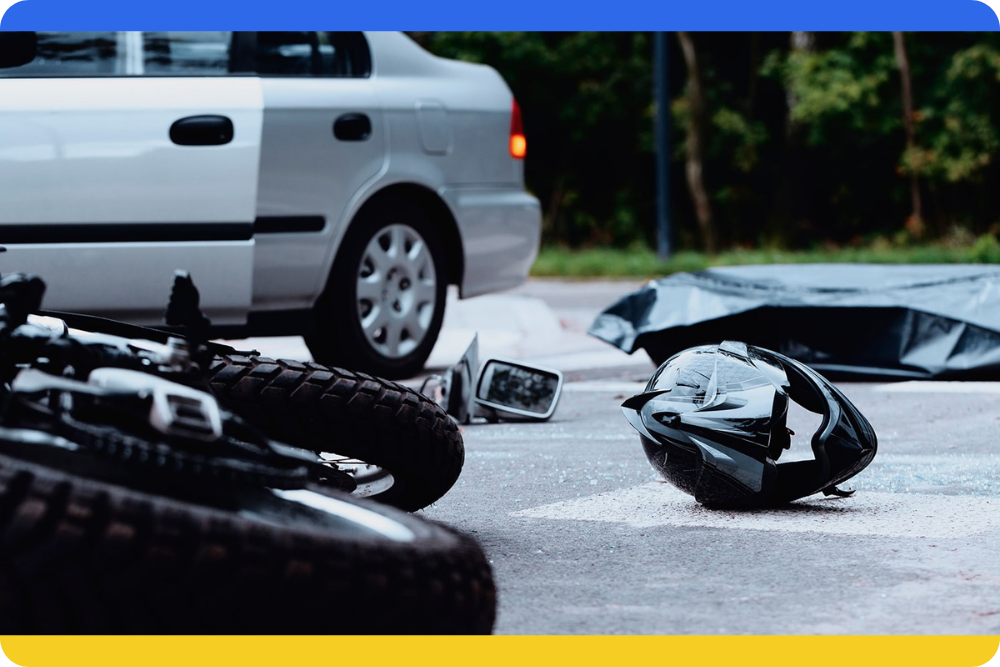
Motorcycle Accident Statistics
The numbers show why motorcycle safety matters:
According to NHTSA:
- 6,084 motorcyclists died in crashes nationally in 2021
- Motorcyclist deaths increased 8% from 2020 to 2021
- 14% of all traffic fatalities are motorcyclists, despite motorcycles being only 3% of registered vehicles
- Alcohol impairment was a factor in 27% of fatal motorcycle crashes
- Helmets saved an estimated 1,872 lives in 2017; 749 more could have been saved if all riders wore helmets
California-specific data from the California Office of Traffic Safety:
- California leads the nation in motorcycle registrations and fatalities
- Rider deaths have increased in recent years despite overall traffic fatality declines in some categories
- Speed and alcohol remain primary factors in fatal motorcycle crashes
The Insurance Institute for Highway Safety tracks motorcycle crash data and provides research on helmet effectiveness and other safety measures.
Dangerous Roads For Motorcyclists In Ventura County
Local roads with elevated motorcycle accident risk:
Highway 101. The main artery through Ventura County. Heavy traffic, distracted drivers, frequent lane changes, and congested interchanges. Rush hour is especially hazardous. Left-turn accidents at on-ramps and off-ramps are common.
Pacific Coast Highway (Highway 1). Scenic but dangerous. Tight curves, ocean views that distract drivers, variable conditions, and tourists unfamiliar with the road. Popular with riders, which also increases exposure.
Highway 33 (Ojai Road). Runs from Ventura through Ojai and into the mountains. Attracts sport riders. Curves, elevation changes, and occasional gravel or debris. Less traffic but higher speeds.
Highway 118 (Los Angeles Avenue). Connects Simi Valley to points west. Suburban traffic, commercial vehicles, and intersections with left-turn hazards.
Highway 126. Links Ventura to Santa Clarita. Two-lane sections with head-on collision risk. Agricultural vehicles, uneven pavement in spots.
Local Streets. Downtown Ventura has door-strike risk from parked cars. Shopping areas bring distracted drivers and pedestrians. Victoria Avenue and Telegraph Road see frequent accidents during commute hours.
Why Choose Cohen Injury Law Group
We ride. We get it. We understand motorcycle culture and the challenges riders face. We don’t buy into the bias against motorcyclists—we fight it.
Experience with serious injuries. Motorcycle crashes cause severe injuries. We’ve handled TBIs, spinal cord injuries, amputations, and wrongful death. We know how to document these cases and calculate long-term damages.
We deal with insurance tactics. Insurers try to blame riders. They lowball settlements. They delay. We know their playbook and how to counter it.
Trial experience. Wayne R. Cohen has tried cases for over three decades. Insurance companies know which attorneys will actually go to court. That knowledge influences how they negotiate.
No fee unless we win. Contingency only. We advance all costs.
What our clients say:
⭐⭐⭐⭐⭐ “Folks call Nick when they have been injured because you won’t find a more knowledgeable and connected attorney out there. Nick has helped me tremendously over the years, no matter what kind of personal injury question or issue I have, and he always gets everything pointed in the right direction!” — Bruce K.
Contact A Ventura Motorcycle Accident Attorney
If you’ve been injured in a motorcycle crash in Ventura, we’ll evaluate your case for free. You pay nothing unless we recover compensation.
Our Ventura office is at 394 E Main St, Suite 302, Ventura, CA 93001. We represent riders throughout Ventura County—Oxnard, Thousand Oaks, Camarillo, Simi Valley, Moorpark, Ojai, and surrounding areas.
We’ll review what happened, explain your options, and answer your questions. No pressure. No obligation.
Contact our Ventura motorcycle accident lawyers today for a free consultation.
Visit Our Ventura Motorcycle Accident Law Offices
We are conveniently located at 394 E Main St, Suite 302
Ventura, CA 93001
HELPFUL VENTURA MOTORCYCLE ACCIDENT LAWYER LINKS
Related Links

Office Locations
-
 Santa Monica
2636 Lincoln Blvd
Santa Monica, CA 90405 -
Santa Monica – Broadway
520 Broadway, 2nd Floor
Santa Monica, CA 90401 -
Los Angeles
633 W 5th St, Unit 2876A
Los Angeles, CA 90071 -
Ventura
394 E Main St, Suite 302
Ventura, CA 93001
