


 Last Updated: September 29, 2026
 Read Time: 8 min

Were you injured in a rideshare accident in Westchester, CA?
At Cohen Injury Law Group, we are plaintiff-focused rideshare accident lawyers preparing every case with experience and dedication.
If the car involved in your crash had a rideshare placard in the windshield, the first question is not who drove carelessly. It centers on the status of the ride, because the answer decides whether a company policy or a personal auto policy responds. That is the threshold an attorney has to settle before anything else. A Westchester, CA rideshare accident lawyer at our firm establishes that answer from the trip record. Reach out and we will review the claim at no charge.
Rideshare Accident Lawyer Westchester, CA
A rideshare accident claim is a negligence action arising from a collision involving a driver working through Uber, Lyft, or a similar platform. The claim follows ordinary California negligence principles, but the recovery depends on a threshold question that other vehicle cases never present: which of several coverage layers was active when the crash occurred.
Westchester borders Los Angeles International Airport, and the volume that airport generates puts an extraordinary density of app-driven vehicles onto Century, Sepulveda, and the surrounding residential grid. LAX handled 73,709,594 passengers in 2025 according to airport reporting, and a substantial share of them arrived at or departed from the curb in a rideshare vehicle.
Who investigates the crash depends on where it happened. The CHP handles collisions on the 405 and the 105, while a crash on Century or Sepulveda goes to a city agency, and the two produce reports on different schedules.
Types of Rideshare Accident Cases We Handle in Westchester
Who you were and where the driver was in the trip cycle determine which policy answers for your injuries. Our Westchester rideshare accident lawyers organize these claims around both.
- Passenger injury claims. You were in the back seat when the crash occurred. This is the strongest coverage position available, because the platform’s full commercial policy is active from pickup through drop-off and applies whether your driver or the other motorist was at fault.
- Car accidents. A driver checking the app or accelerating toward a ping hits your car. Coverage turns on whether a ride had been accepted, and the platform will not volunteer that detail to an unrepresented claimant.
- Pedestrian accidents. Drivers pull to unfamiliar curbs, stop abruptly, and open doors into crosswalks while following turn-by-turn directions. Pedestrians near hotel and terminal approaches absorb the result.
- Bike accidents. Curbside pickups place stopped vehicles directly in the bike lane, and passengers exiting without checking cause dooring collisions that throw riders into traffic.
- Scooter accidents. Riders travel at speeds drivers underestimate, and a vehicle merging toward a pickup point rarely accounts for them.
- Motorcycle accidents. Sudden lane changes toward a pickup address leave riders no room, and adjusters reflexively attribute the crash to rider speed.
- Truck accidents. Century Boulevard carries freight and airport service vehicles alongside rideshare traffic, and a multi-vehicle crash brings a motor carrier’s insurer into the same claim.
- Wrongful death. A fatal rideshare crash gives close relatives their own cause of action, and the platform’s coverage position governs it just as it governs an injury claim.
- Rideshare drivers injured by others. Drivers hurt by a third party have their own claim, and the platform’s uninsured motorist coverage may apply when the at-fault motorist carries too little.
- Airport curb and staging collisions. Crashes inside pickup lots and along terminal approaches involve congested low-speed maneuvering, disputed right of way, and often more than one commercial insurer.
Why Choose Cohen Injury Law Group as my Rideshare Accident Lawyer in Westchester, CA?
Which Policy Was Live at the Moment of Impact
The California Public Utilities Commission regulates rideshare companies and sets the insurance obligations that attach to them, and those obligations shift depending on whether the app was off, on and waiting, en route to a pickup, or carrying a passenger. Each phase opens a different layer, and the difference between them is substantial. We request the trip record, the driver’s app status log, and the platform’s coverage position in writing at the outset, because a claim filed against the wrong policy stalls for months. That determination is the kind of dedicated work you should expect from a personal injury lawyer in Westchester, CA handling your case.
You Will Not Have to Chase Us for an Answer
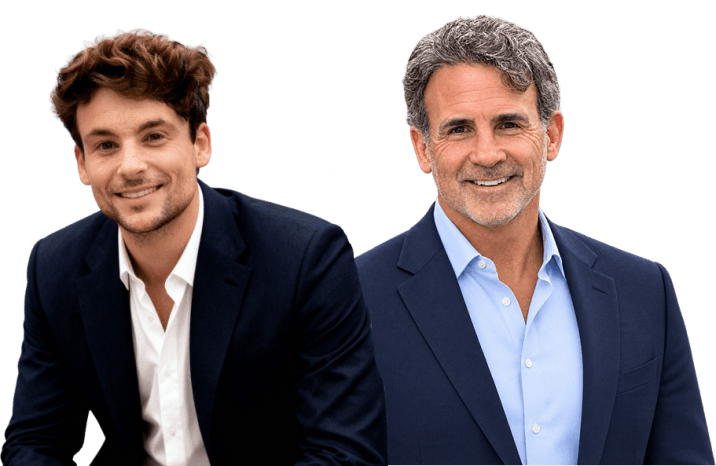
Nicholas E. Cohen built the firm’s case management and communication systems, drawing on a combined legal and business background, so clients receive status updates rather than having to request them. Wayne R. Cohen has practiced since 1991, teaches Trial Skills at The George Washington University Law School, and graduated cum laude from Miami Law; his recoveries for injured clients run into the millions. Every Westchester rideshare accident attorney at our firm works on contingency, so nothing is owed unless we recover.
What Is Important to Understand About a Rideshare Accident Case?
Damages, Liability, and Compensation for Rideshare Accident Cases
Liability follows the ordinary negligence standard. Someone owed you reasonable care behind the wheel, failed to provide it, and caused your injuries. Where the analysis diverges from a standard collision is that establishing fault only opens the question of which insurer pays, and answering it is the daily work of a rideshare accident lawyer in Westchester, CA.
Coverage generally falls into four phases:
- App off, meaning the driver’s personal auto policy applies alone
- App on with no ride accepted, which opens a contingent layer above the personal policy
- Ride accepted and driver en route, which triggers the platform’s commercial coverage
- Passenger on board, where that commercial coverage remains at its highest level
Recoverable compensation is the same as in any injury claim: medical treatment already provided and reasonably anticipated, income lost during recovery, reduced earning capacity where the injury is lasting, and the pain, disruption, and emotional harm the collision caused. Serious impacts also produce injuries that do not present immediately, and a delayed diagnosis of a brain injury can change the value of a claim considerably. Any share of fault attributed to you reduces the total by that percentage rather than ending the claim.
What Are Important Aspects of a Rideshare Accident Case?
Almost everything that decides a rideshare claim sits in someone else’s hands. The proof is held by a technology company, the money is held by several insurers at once, and neither volunteers anything.
- The trip record is the pivotal evidence, and it lives on servers you have no direct access to
- Platforms retain that data under their own schedules, so a written preservation demand should go out early
- More than one insurer is usually involved, and each has an incentive to point at the others
- Your own underinsured motorist coverage may become relevant if the at-fault party is not the rideshare driver, and the Department of Insurance sets out what your own carrier owes you in that situation
- A passenger’s claim and a driver’s claim proceed differently even when they arise from the same crash
What Is The Rideshare Accident Case Timeline?
These claims move on a schedule set by the coverage question and by your medical recovery. The first month goes to preserving trip data, obtaining the collision report, and getting the platform to state its coverage position on the record. Treatment then runs its course, and we do not submit a demand until a physician can describe what your recovery looks like going forward, which typically falls somewhere between four months and a year depending on the injuries. Negotiation follows, and most rideshare claims resolve at that stage. Where the insurers continue disputing which policy applies, or dispute the value of future care, we file suit and proceed through discovery and mediation. A resolved case generally closes between ten and twenty months from the crash; a filed case runs longer.
What Should You Bring to Your Rideshare Accident Consultation?
Anything in your possession helps. Even a partial set of these is useful at a first meeting.
- The trip receipt or a screenshot of the ride in the app
- Whatever the responding officer gave you, or the collision report number
- Any images you or a witness captured before the vehicles were moved
- Paperwork from the emergency room or from any follow-up visit
- The declarations page showing your own coverage limits
The first meeting usually takes about an hour. We will identify which coverage phase applies, name the insurers likely to be involved, and tell you directly if the trip data undercuts your position, because you should hear that from us rather than from an adjuster.
Most Dangerous Locations for Rideshare Accidents in Westchester, CA
Rideshare volume concentrates along the corridors that feed the airport, and a Westchester rideshare accident lawyer reads a claim differently depending on which one it happened on.
Streets where these collisions cluster:
- Century Boulevard. The principal terminal approach, carrying passenger pickups, hotel shuttles, and freight in the same lanes.
- Sepulveda Boulevard. Continuous merging traffic and frequent unplanned curbside stops.
- Airport Boulevard. Heavy staging and repositioning traffic between fares.
- Manchester Avenue. Connects residential Westchester to the terminal traffic stream.
- Lincoln Boulevard. Carries coastal traffic into the airport approach with limited turn refuge.
Freeways feeding the area:
- Interstate 405. The primary route to LAX, where congestion produces rear-end impacts during pickup runs.
- Interstate 105. Terminates at the airport and concentrates merging traffic in its final stretch.
- State Route 1. Delivers beach-corridor traffic into the same congested approach.
Reach Out to Cohen Injury Law Group to Schedule a Consultation
Trip records do not stay available indefinitely, so the sooner we send a preservation demand the more of the evidence survives. Our rideshare accident attorneys work on contingency, and reviewing your claim costs you nothing. We will identify the coverage layer that applies, explain what the platform is likely to argue, and give you a straight assessment of what the case is worth. New inquiries reach an attorney the same business day. Contact us when you are ready to begin.
Office Locations
-
 Santa Monica

2636 Lincoln Blvd
Santa Monica, CA 90405 - Santa Monica – Broadway
520 Broadway, 2nd Floor
Santa Monica, CA 90401 - Los Angeles
633 W 5th St, Unit 2876A
Los Angeles, CA 90071 - Ventura
394 E Main St, Suite 302
Ventura, CA 93001
