
Injury & Accident Lawyers
Design Decides Liability on Public Shoreline
Written/Reviewed by:
Cohen Injury Law Group, P.C.
Last Updated: October 20, 2026
 October 24, 2026
 Read Time: 4 min

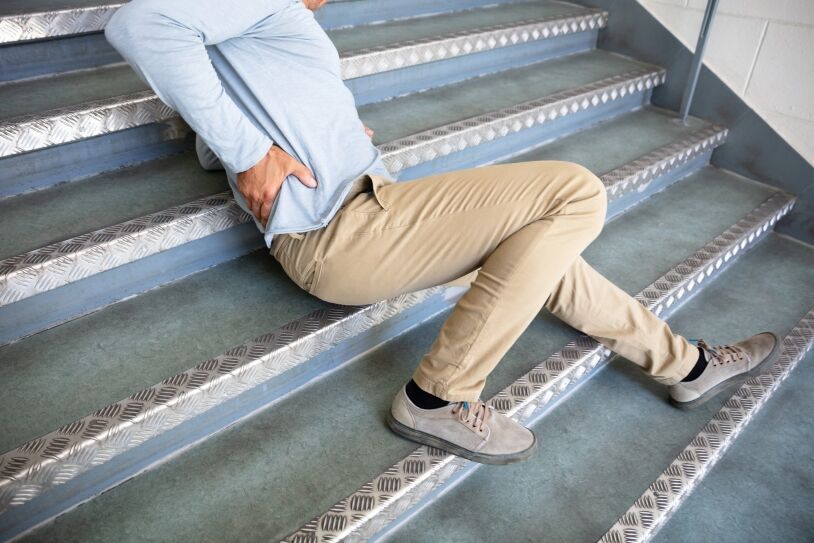
Staircases down to the sand, boardwalks, parking lots, and bike paths all draw crowds along the coast. When someone gets hurt there, the first question is often who owns the spot, and the second is whether the hazard was natural or built. California law treats those two categories very differently, and the answer can decide whether a claim has any chance.
Natural Conditions Get Special Protection
Public entities enjoy an immunity for natural conditions. Government Code section 831.2 provides that a public entity isn’t liable for an injury caused by a natural condition of any unimproved public property, including any natural condition of a lake, stream, bay, river, or beach.
Waves, sand, tides, and rock formations fit that description. A person knocked down by the surf or hurt on an untouched stretch of shoreline will usually find this rule standing in the way.
Built Features Follow a Different Rule
Man-made structures are not shielded the same way. Government Code section 835 allows a public entity to be held liable for injury caused by a dangerous condition of its property when the condition created a reasonably foreseeable risk of the kind of injury that occurred. The injured person must also show either that an employee’s negligent act created the condition or that the entity had notice of it in time to protect against it.
Concrete steps, handrails, lighting, fencing, walkways, and parking areas all count as built features. A loose rail on a beach staircase is a very different case from a rip current.
Where the Two Categories Meet
Real incidents don’t always sort neatly. A walkway undermined by erosion, a staircase that ends in loose sand, or a fence broken by a storm can mix natural forces with human design. Those cases tend to turn on who maintained what and what the entity knew.
Disputes like these start with facts. Injured visitors often rely on a Manhattan Beach personal injury lawyer to pin down the exact location, the owner, and the condition before anyone argues about which rule applies.
Evidence That Separates One From the Other
Photographs taken soon after the injury often answer the first questions. Useful items include:
- Wide and close-up photos of the exact spot from several angles
- Any posted signs, barriers, or warnings
- The time of day, weather, and surf or tide conditions
- Names and numbers for witnesses and lifeguards on duty
- Medical records from the first visit
Because the shoreline changes, the scene may be altered within days. Waiting to document it risks losing the best proof.
Paths and Roads Near the Water
Coastal paths mix pedestrians, bikes, scooters, and skaters, and collisions among them raise a separate set of fault questions. Sorting out fault in those disputes involves e-bike and scooter liability principles that differ from ordinary car crashes.
Cyclists face their own hazards. Road design and driver behavior can both matter in beach bicycle collisions.
Roads along the shoreline carry risks of their own. They range from Pacific Coast Highway accidents to crashes on the local roads near parking areas.
Claims Against Public Property Run on a Short Clock
Even a strong dangerous-condition claim depends on timing. Claims against government bodies generally require a written claim well before the usual period for California injury filing deadlines runs out, and the exact window depends on the type of claim.
Missing the earlier notice step can end a claim that would have been viable, no matter how the broader liability rules apply. Timing is everything here.
Wayne R. Cohen graduated with distinction from the University of Michigan and cum laude from the University of Miami School of Law, and he has practiced since 1991. At Cohen Injury Law Group, that trial experience matters when a case turns on exactly how a hazard is categorized.
Questions about natural and built hazards are rarely simple. Anyone hurt near the water in Manhattan Beach who isn’t sure how the law applies can reach out to us, and we’ll help sort out what happened before the early deadlines pass.
Calling us is
always free.
FREE Case Evaluation - 1 Free Evaluation
- 2 We Build Your Case
- 3 Financial & Emotional Recovery
Office Locations
-
 Santa Monica

2636 Lincoln Blvd
Santa Monica, CA 90405 - Santa Monica – Broadway
520 Broadway, 2nd Floor
Santa Monica, CA 90401 - Los Angeles
633 W 5th St, Unit 2876A
Los Angeles, CA 90071 - Ventura
394 E Main St, Suite 302
Ventura, CA 93001
Schedule your no-cost consultation.
